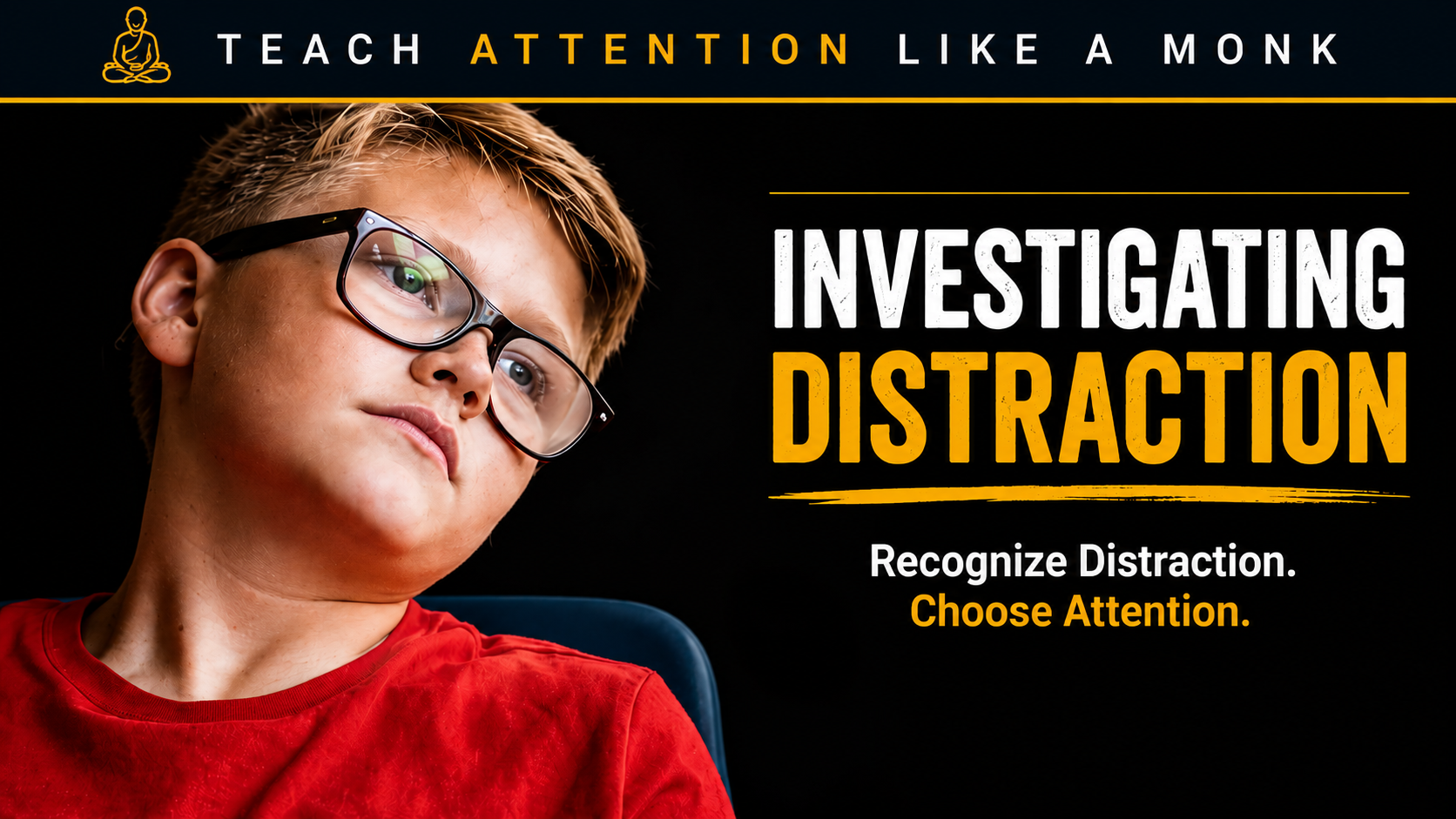
Investigating Distraction Help students understand distraction before asking them to focus.
Investigating Distraction is a practical classroom resource that develops attention awareness, concentration, self-regulation, and independent learning through guided investigations, discussion activities, and student worksheets.
Why This Resource Works
Help Students Understand Distraction Before Asking Them to Focus
Investigating Distraction is a practical classroom resource designed to help students explore where attention goes, how distraction operates, and why concentration is often lost during learning. Through a series of guided investigations, students learn to observe thoughts, physical sensations, emotions, preferences, and other common attention traps that compete for focus in the classroom.
Rather than simply telling students to "pay attention," this resource helps learners develop awareness of their own attention. By recognising distraction as it happens, students begin building the foundation for stronger concentration, self-regulation, and independent learning habits.
Built around the central question, "Where is your attention now?", the activities provide teachers with a simple framework for discussing focus and distraction in a practical, non-judgmental way. Students learn that distraction is not something that happens to other people—it is a normal part of learning that can be recognised, understood, and managed.
What's Included
Teacher introduction video
Distraction Map
Investigation 1: Spotting Thoughts
Investigation 2: Spotting Sensations
Investigation 3: Name the Distractor
Investigation 4: I
Student worksheets
Discussion prompts
Teacher guidance notes
Ideal For
Upper Primary
Secondary
Tutor Time
Wellbeing Programs
Intervention Groups
Classroom Focus and Attention Training
Social and Emotional Learning (SEL)
Learning Outcomes
Students learn to:
Recognise common sources of distraction
Increase awareness of thoughts, emotions, and physical sensations
Develop stronger attention awareness
Build concentration and self-regulation skills
Take greater ownership of their learning
Develop a shared language for discussing attention and focus in the classroom